
Does Isometric Exercise Build Strength? Why Force Matters More Than Movement
By Matt Pack · August 15, 2026
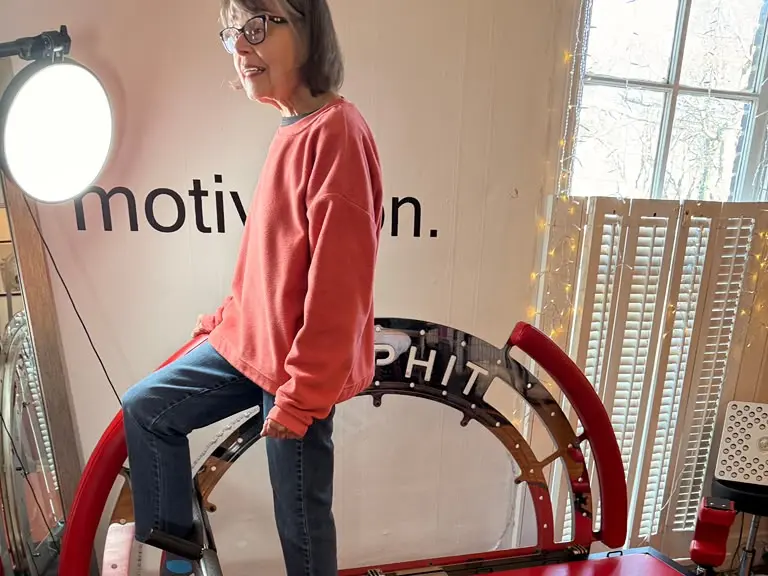
Yes. Isometric exercise can build strength by teaching your muscles to produce force while the working joint stays in a relatively fixed position. The resistance does not need to travel for the muscles to work hard.
That simple idea changes how many people think about strength training. We are used to judging a workout by what moves: a barbell rises, a machine arm rotates, or a person completes another repetition. But movement is only the visible result. Force comes first.
After decades of coaching, that is what makes isometric training so interesting to me. It gives us a focused way to train force while controlling the position, the effort, the duration, and the progression. For adults who want to become stronger without relying exclusively on repetitive lifting, that control can be extremely useful.
What Is Isometric Exercise?
Isometric exercise is a muscle contraction performed while the working joint remains relatively still. Instead of lifting and lowering a weight through repeated motion, you press or pull against fixed resistance, or hold a position against gravity.
A wall sit, a plank, and a hard squeeze on a grip dynamometer are familiar examples. The ISOPHIT system used in Prime Strength 30™ applies the same principle through coached positions in which the participant creates force against fixed resistance.
Direct answer: Isometric means the muscle is producing tension while the joint angle changes very little. It does not mean the muscle is resting, and it does not automatically mean the exercise is easy.
How Can You Get Stronger If Nothing Moves?
Strength is the ability to produce force. When you perform a well-programmed isometric contraction, your nervous system recruits muscle fibers and your muscles create tension against resistance. Repeated practice can improve your ability to produce force, especially in the positions and contraction type you train.
A 2025 systematic review and meta-analysis of 32 studies in healthy adults found that isometric resistance training improved strength compared with no exercise. It produced greater gains in isometric strength than dynamic resistance training, while improvements in isokinetic strength were similar between the two methods. That review involved adults ages 18 to 45, so it should not be treated as direct proof of identical results in every older population. It does, however, reinforce the basic point that meaningful strength adaptation does not require a weight to travel through space.
This is also why isometrics and traditional resistance training should not be framed as enemies. Dynamic training develops strength through movement. Isometric training develops force in controlled positions. Depending on the person and the goal, one may be emphasized or both may be used.
The Four Variables a Coach Can Control
One of the things I value most about isometric training is how precisely we can adjust the challenge. Four variables matter:
- Position. The coach selects a joint position that is appropriate for the exercise and the participant.
- Effort. The participant can produce force relative to their current ability rather than trying to match someone else in the room.
- Duration. The contraction can be held for a planned amount of time, with rest provided between efforts.
- Progression. As force production and confidence improve, the coach can increase the demand in a deliberate, measurable way.
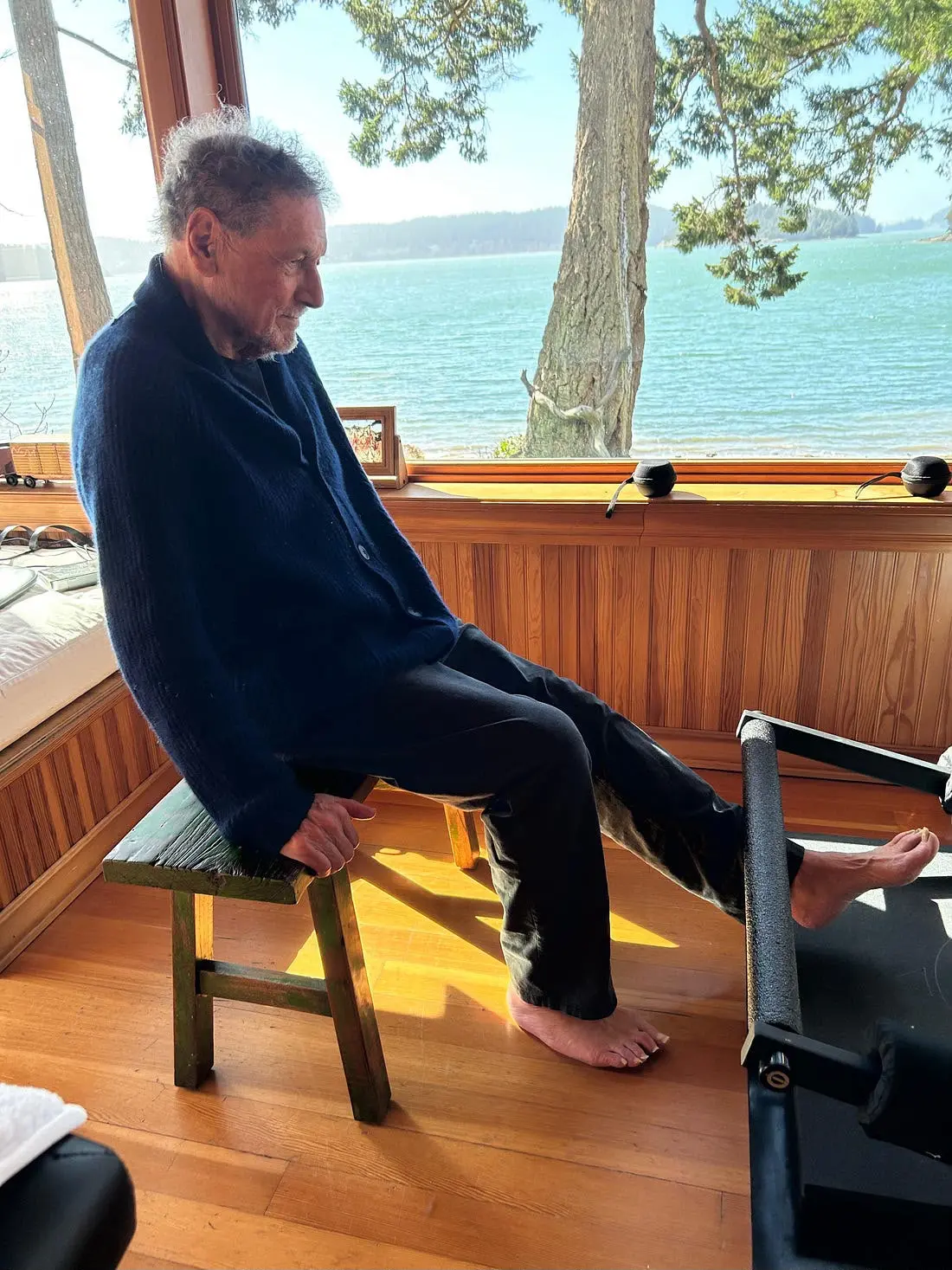
That level of control matters because good coaching is not simply choosing an exercise. It is choosing an appropriate version of the exercise, observing the person in front of you, and progressing the work at the right pace.
Why Control Matters More as We Age
Adults in their 50s, 60s, 70s, and beyond are not one uniform group. Some have trained for years. Some are returning after a long break. Some are managing medical conditions or previous injuries. Others are simply uncomfortable in a traditional gym environment.
A controlled isometric approach gives the coach another way to challenge the muscular system without depending on repeated lifting and lowering. The effort can still be demanding, but it can be scaled to the person. You do not have to get fit before you begin. The starting point is where the coaching begins.
This does not make isometrics a medical treatment, and “joint-friendly” should not be interpreted as risk-free. Exercise selection still needs to account for health history, symptoms, training experience, and any guidance from a healthcare professional.
What the Research Supports, and What It Does Not
The strongest case for isometric training is straightforward: it can improve force production when programmed consistently and progressively. Research has also explored other outcomes, but those findings need careful language.
Resting blood pressure
A 2023 network meta-analysis of 270 randomized trials found that several forms of exercise improved resting blood pressure, with isometric exercise ranking highly among the modes studied. That is encouraging evidence, but it does not mean a specific fitness class will lower every participant’s blood pressure. Prime Strength 30™ is not hypertension treatment, and exercise should not replace medical care or prescribed medication.
Grip strength and longevity
Grip strength is often measured isometrically, and large observational studies have repeatedly associated lower grip strength with poorer health outcomes and higher mortality risk. The correct interpretation is that grip strength can be a useful marker of overall physical capacity. It does not prove that squeezing harder causes a longer life.
For the deeper evidence discussion, read Isometric Strength and Longevity: Why Strength May Matter More Than You Think.
What Isometrics Cannot Do by Themselves
A credible strength program should be honest about specificity. You tend to improve what you train. Isometric work can be excellent for force production, but daily life also includes movement, balance, coordination, power, mobility, and cardiovascular demands.
That means isometrics should not automatically be presented as a complete replacement for every other form of exercise. A person’s broader plan may also need dynamic strength work, walking or other aerobic activity, balance practice, mobility work, or sport-specific training. The right mix depends on the person and the outcome that matters to them.
Strength Is Your Ability to Interact With the World
Most people do not care about strength because they want an impressive number on a gym record. They care about what strength allows them to keep doing:
- Stand up from a chair with confidence
- Climb stairs and carry groceries
- Lift a suitcase and travel
- Get down to the floor and back up
- Work, garden, play, and stay involved with family
Strength is not only about appearance. It is physical capacity. It gives you more options when life asks you to push, pull, carry, stand, catch yourself, or keep going.
How Prime Strength 30™ Puts the Idea Into Practice
Prime Strength 30™ is Primal Fit Miami’s proprietary 12-week strength program for adults 50+. It combines ISOPHIT isometric strength training with personal coaching, a small-group environment, and objective progress checks.
- 30-minute coached sessions
- Small groups capped at five participants
- A personalized starting frequency
- A baseline Primal Strength and Vitality Assessment
- Individualized position, effort, duration, and progression
- Appropriate reassessment at the end of 12 weeks
Depending on the participant, the assessment may include grip strength, sit-to-stand performance, balance, mobility, body composition, and ISOPHIT force measurements. These are fitness and wellness measurements, not medical diagnoses.
The goal is not to rush through repetitions or compete with the room. It is to establish where you are, train with purpose, and make progress you can measure.
You Start Where You Are
You may be active already. You may be returning after years away. You may want a more focused way to train as you get older. Prime Strength 30™ is designed to begin with a conversation and an assessment so the coaching can reflect your actual starting point.
The program is scheduled to launch in September 2026 at Primal Fit Miami near Miami Shores. The first step is a 60-minute consultation with Bonnie to discuss your goals, training history, current ability, and whether the program is an appropriate fit.
Train to age stronger. Your age may go up. Your strength does not have to follow the same path. Start with the right position, the right effort, and coaching that knows how to build from there.
Learn More About Prime Strength 30™ Schedule Your 60-Minute Consultation
Prime Strength 30™ is a fitness program, not medical care or physical therapy. Individual results vary.
Frequently Asked Questions
Does isometric exercise really build strength?
Yes. Isometric exercise can improve the ability to produce force, especially in the positions and contraction type trained. Results depend on exercise selection, effort, duration, progression, recovery, and consistency.
Can isometric exercise build muscle?
Isometric training can create enough muscular tension to support muscle growth, but results depend on the training dose and how the exercise is performed. A complete program may use isometric, dynamic, or combined methods according to the person’s goals.
Is isometric training easier on the joints?
It can reduce repetitive joint movement and allows the coach to choose controlled positions. That can be useful for some people, but it does not make every exercise appropriate for every joint or health condition.
Can isometric exercise lower blood pressure?
Research suggests that regular isometric exercise training can reduce resting blood pressure in some populations. It is not a substitute for medical evaluation, prescribed treatment, or individualized healthcare guidance.
Do isometrics replace traditional strength training?
Not necessarily. Isometrics can be used as an alternative or complement to dynamic strength training. The best approach depends on the abilities and outcomes being trained.
What is Prime Strength 30™?
Prime Strength 30™ is Primal Fit Miami’s 12-week, coach-led ISOPHIT strength program for adults 50+. Sessions last 30 minutes, groups are capped at five, and the program includes baseline and final assessments.
Research References
- Ghayomzadeh M, et al. Effects of isometric vs. dynamic resistance training on isometric and isokinetic muscular strength. Journal of Science and Medicine in Sport. 2025.
- Edwards JJ, et al. Exercise training and resting blood pressure: a large-scale pairwise and network meta-analysis of randomised controlled trials. British Journal of Sports Medicine. 2023.
- Cooper R, et al. Objectively measured physical capability levels and mortality: systematic review and meta-analysis. BMJ. 2010.
Train with Miami's most trusted gym
Book a free consultation - we'll build the right plan for you.