
Kids Are Moving. But Are They Actually Getting Stronger?
By Matt Pack · August 31, 2026
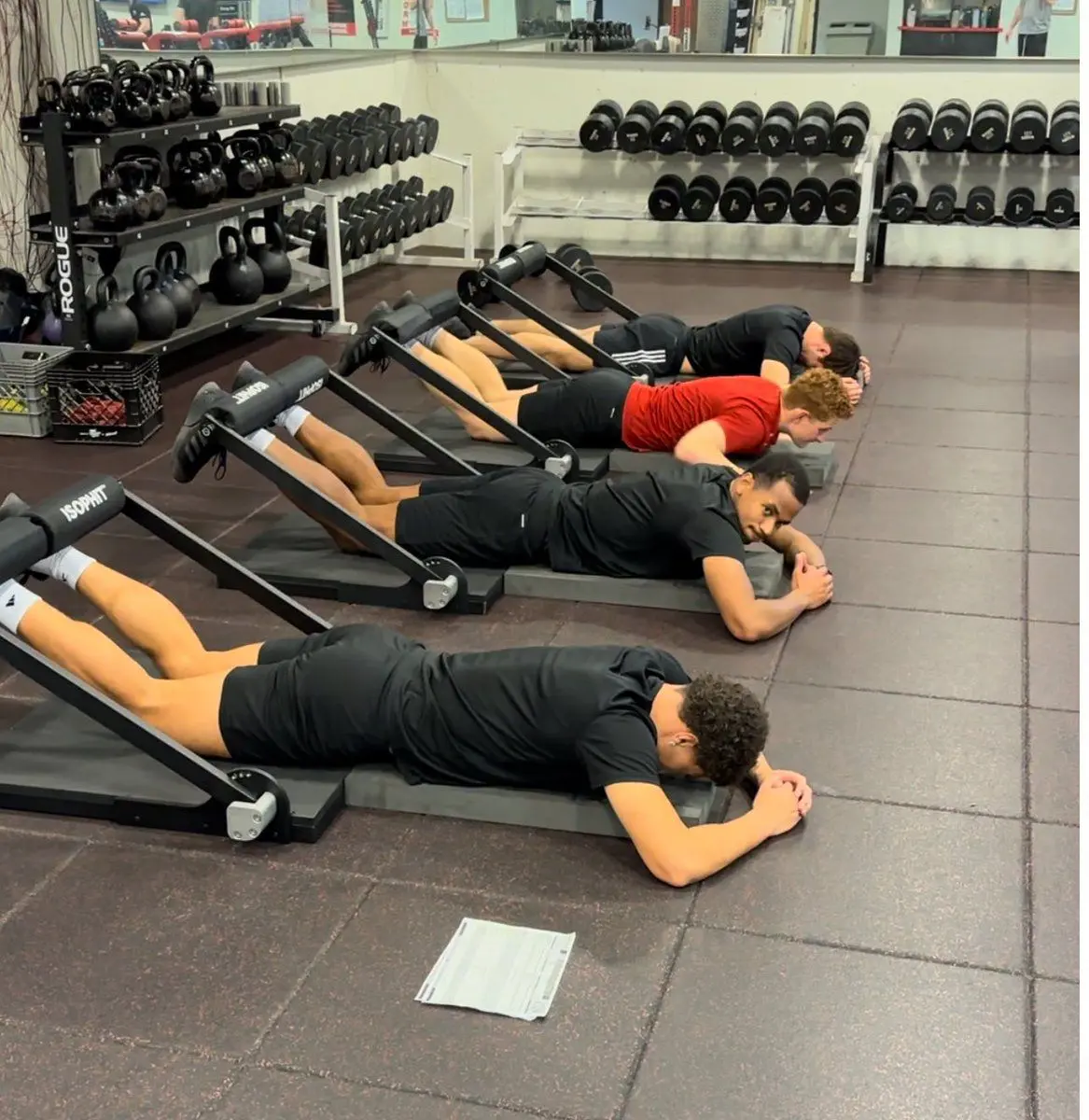
The short answer: A child can be active, play organized sports, attend PE, and still have important strength qualities that are not being deliberately developed. Movement matters, but activity and physical capacity are not the same measurement.
We track steps, practices, workouts, heart rate, calories and activity minutes. Those numbers tell us that someone did something. They do not automatically tell us whether that person became stronger, more stable or more capable of producing force.
That distinction matters for kids, athletes, parents and every adult thinking about healthy aging. The goal is not to replace movement with strength training. It is to recognize that a complete approach to fitness should include both.
Activity Is Not the Same as Capacity
Physical activity describes behavior. Strength describes an ability.
One answers, "How much did you move?" The other asks, "What can your body produce, control and tolerate?"
A soccer practice may involve plenty of running. A swim session may build excellent conditioning. PE may expose a student to a variety of games and movements. All of that can be valuable. But each activity creates a specific training stimulus, and none guarantees complete strength development by itself.
This is not an argument against sports. It is an argument for asking a better follow-up question: what physical qualities is this activity actually developing?
Public health guidelines make the same distinction. In addition to recommending at least 60 minutes of moderate-to-vigorous physical activity per day for children and adolescents, U.S. guidelines call for muscle-strengthening activity on at least three days each week.[1]
Movement is the broad goal. Muscular strengthening is a specific part of it.
So, Are Kids Actually Getting Weaker?
The honest answer is that the population research is more complicated than a single headline.
Handgrip strength is widely used because it is simple, quick and repeatable. A person squeezes a dynamometer, and the device measures force. It can offer a useful window into muscular strength, but it is not a complete test of athleticism, lower-body strength, movement skill or overall health.
It also matters how researchers analyze the result. Absolute grip strength tells us how much force someone produced. Body-size-adjusted strength asks how much force they produced relative to dimensions such as height and weight. Children have also become taller or heavier in many populations, so those two approaches can tell different stories.
A 2020 systematic analysis of more than 2.2 million children and adolescents from 19 countries reported that absolute handgrip strength improved overall between 1967 and 2017. The authors also found meaningful differences among countries and called for better international surveillance.[2]
A newer analysis of approximately 1.08 million children and adolescents in China found that absolute grip strength improved from 2000 to 2019. After adjusting for height and weight, however, the overall improvement was much smaller. Some age, sex and regional subgroups declined while others improved.[3]
The responsible conclusion is not that every child today is weaker. It is that strength trends depend on what is measured, how it is adjusted and which population is being studied.
More importantly for an individual family, population averages cannot tell you whether one particular child is developing the strength needed for sport, confidence and long-term physical capability.
Why Organized Sports May Not Be Enough
Sports build skills specific to the sport. They may also improve conditioning, speed, coordination, power or strength. But the training effect depends on the demands of the activity, the role the athlete plays, the quality of coaching and the way practice time is used.
Research in youth athletes reinforces this point. A systematic review found that supervised resistance training improved strength and other performance measures beyond regular sport training alone.[4]
An umbrella review of 14 meta-analyses likewise concluded that appropriately prescribed and supervised resistance training improves muscular strength in healthy children and adolescents beyond gains expected from growth and maturation.[5]
In plain language, a busy practice schedule is not proof that every useful strength quality is improving. Sport practice and strength development can complement each other, but they are not interchangeable. That is the same reason isometric training for athletes is treated as a supplement to practice, not a substitute for it.
What Age-Appropriate Strength Training Looks Like
Youth strength training does not need to resemble an adult bodybuilding program, a maximal-lifting contest or a punishment workout. The right program reflects the child's maturity, training experience, movement skill and ability to follow directions.
Depending on the child and the goal, muscle-strengthening work can include:
- Body-weight movements
- Resistance bands
- Medicine balls
- Free weights
- Machines
- Climbing
- Jumping
- Carrying
- Controlled isometric exercises
The equipment matters less than sound instruction, appropriate loading, good technique and gradual progression.
Qualified supervision is essential. A coach should teach first, observe closely and progress the exercise only when the athlete can control the current version.
For a child with pain, a medical condition, a recent procedure or exercise restrictions, parents should involve the appropriate healthcare professional before beginning a new program.
Strength Is Physical Reserve
The youth question leads to a much larger idea: strength is not only about performance today. It is part of the physical reserve we carry into the future.
An international systematic review using data from more than 2.4 million adults found that average grip strength peaked between ages 30 and 39 and declined afterward. The decline accelerated from middle to later adulthood.[6]
That describes a population pattern, not an unavoidable personal timetable. But it gives us a useful reason to build strength early and keep training it.
Lower muscular strength has also been associated with higher risks of all-cause mortality, cardiovascular outcomes and physical disability in large observational studies.[7][8]
Association is not causation. Squeezing a grip trainer does not guarantee a longer life, and a grip test does not diagnose health. Grip strength is better understood as one practical marker of broader physical capacity.
The reserve concept is still valuable. If age, illness, injury or inactivity begins taking capacity away, it is reasonable to want more capacity in the account to begin with. Strength gives us more options when life asks us to stand, carry, climb, brace, catch ourselves or keep going. That is the same argument behind strength and longevity after 50.
Why I Am Interested in Isometric Strength Training
This is one reason I am so interested in what we are doing with isometric strength training at Primal Fit Miami.
An isometric exercise asks the muscles to produce force while the working joint remains relatively still. Instead of repeatedly lifting and lowering a weight, a person presses, pulls or holds against resistance in a controlled position. A grip-strength test is itself a simple isometric effort.
For me, the important idea is not that isometrics should replace every other kind of exercise. It is that they give a coach another way to select a position, scale the effort, plan the duration and measure force production. Strength becomes something we can train deliberately and, in the right setting, reassess under consistent conditions.
At Primal Fit Miami, our current isometric programs and assessments are designed for adults. Prime Strength 30™ is our coach-led, 12-week ISOPHIT program for adults 50+. The Primal Longevity Assessment™ establishes adult fitness and wellness baselines that can include grip strength, selected ISOPHIT force measurements, balance and other measures.
These are coaching and fitness services, not medical diagnosis or treatment.
Measure What You Want to Improve
We do not need to stop counting steps or celebrating practices completed. Cardiovascular fitness matters. Mobility matters. Skill matters. Daily movement matters.
But if strength matters too, we should ask questions that activity trackers cannot answer:
- Is force production improving?
- Is the person stronger relative to an appropriate baseline?
- Are different regions of the body being trained?
- Can the person control useful positions with good technique?
- Does the training progress as the person adapts?
- Are the measurements repeatable and interpreted in context?
The point is not to turn every child or adult into a spreadsheet. The point is to stop assuming that being busy is the same as becoming capable.
Move More. Build More Capacity.
Kids should play, explore, practice, compete and move. Adults should keep walking, conditioning, practicing mobility and doing the activities they enjoy. None of that is in conflict with strength training.
The better message is additive: move more, and deliberately build strength. Develop capacity early. Preserve it as long as possible. Measure enough to know whether the plan is working.
Getting older is inevitable. Becoming weaker without giving strength any direct attention is not.
If you are an adult in Miami Shores or the surrounding Miami community and want to understand your current strength and physical capacity, start with a conversation.
Book the Primal Longevity Assessment™ Explore Prime Strength 30™
Frequently Asked Questions
Can kids get stronger safely?
Yes. Evidence and professional guidance support appropriately designed youth resistance training when it is taught and supervised by qualified professionals. Exercise selection, load and progression should reflect the child's maturity, skill and ability to follow instructions.
Does playing a sport automatically make a child strong?
Not necessarily. A sport may develop some forms of strength, power, conditioning and coordination, but the adaptation depends on the sport and how the athlete trains. Supervised resistance training can produce additional strength gains beyond sport practice alone.
Is grip strength a complete measure of fitness?
No. Grip strength is a convenient marker of muscular strength, but it does not measure every part of physical fitness. It should be interpreted alongside age, body size, health context, lower-body capacity, conditioning, balance and other relevant measures.
What is isometric strength training?
Isometric training involves producing muscular force while the working joint remains relatively still. Examples include a plank, a wall sit, a grip-strength test, or pressing and pulling against fixed resistance in controlled positions.
Should adults measure their strength?
A repeatable strength measure can provide a useful fitness baseline and help track change over time. No single score defines health, and fitness assessments are not medical diagnoses. The most useful measures are selected and interpreted in the context of the individual's goals and abilities.
Research and References
- Centers for Disease Control and Prevention. Physical Activity Guidelines for School-Aged Children and Adolescents. Updated July 3, 2024. View guidelines
- Dooley FL, et al. A systematic analysis of temporal trends in the handgrip strength of 2,216,320 children and adolescents between 1967 and 2017. Sports Medicine. 2020;50:1129-1144. View study
- Trends and distributional characteristics in handgrip strength of 1,082,296 children and adolescents in China. BMC Public Health. 2025. View study
- Lesinski M, et al. Effects and dose-response relationships of resistance training on physical performance in youth athletes. British Journal of Sports Medicine. 2016;50:781-795. View study
- Lesinski M, et al. Effects of resistance training on physical fitness in healthy children and adolescents: an umbrella review. Sports Medicine. 2020;50:1901-1928. View study
- Tomkinson GR, et al. International norms for adult handgrip strength. Journal of Sport and Health Science. 2025;14:101014. View study
- Garcia-Hermoso A, et al. Muscular strength as a predictor of all-cause mortality in an apparently healthy population. Archives of Physical Medicine and Rehabilitation. 2018;99:2100-2113.e5. View study
- Wu Y, et al. Association of grip strength with risk of all-cause mortality, cardiovascular diseases, and cancer. Journal of the American Medical Directors Association. 2017;18:551.e17-551.e35. View study
This article is general fitness information, not medical advice. Individual results vary.
Train with Miami's most trusted gym
Book a free consultation - we'll build the right plan for you.